
Cangzhou Spiral Steel Pipes Group Co.ltd
The Solid Foundation for Project SuccessInterlocking Pipe Piles
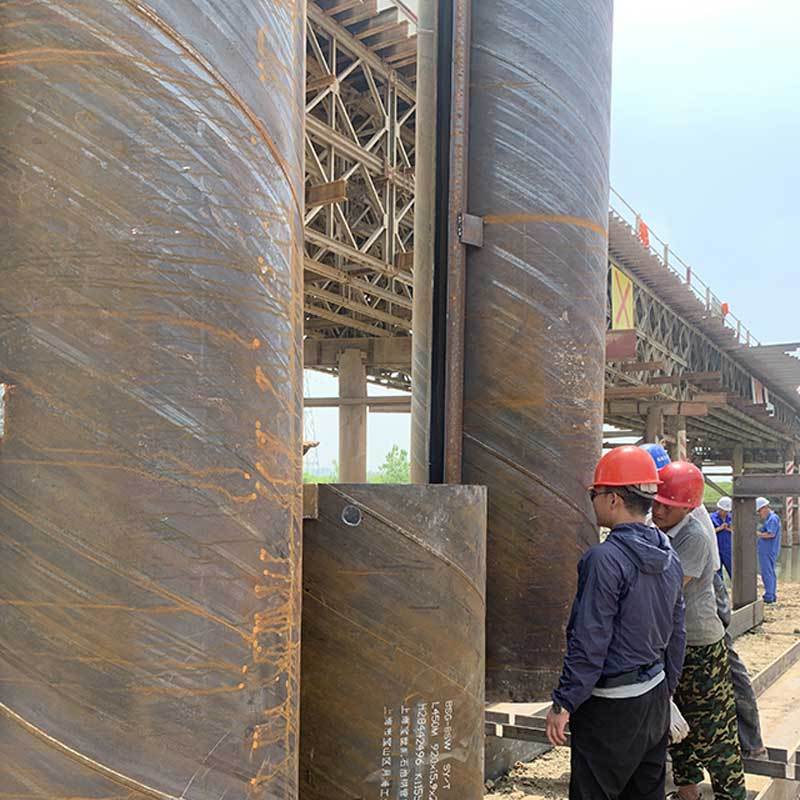
Basics-Interlocking Pipe Piles for Sale
Cangzhou Spiral Steel Pipes Group Co., Ltd. can manufacture custom interlocking pipe piles in a variety of specifications and materials, providing high-quality interlocking pipe piles for piling projects worldwide.
Steel Grade: A252 Gr.2/3 S235JRH S355JR/J2H S460MH,etc.
Forming Process: SSAW
Interlock Type: C9/CT/Socket and Ball Interlock
Certification:CE CNAS API 5L ISO9001/14001/45001,etc.
Outer Diameter: 219-3620mm
Wall Thickness: 6-25mm
Length: 12-60M or Custom
Surface Treatment: Hot Dipped Galvanized Or epoxy coating, etc.
Standard: ASTM A252,EN10219,GB/T 700,GB/T 1591,API 5L,etc.
Raw Material: Carbon Steel
MOQ: 2-5 Tons
Port: Tianjin Xingang Port
Delivery Time: 5-45 Days
Payment: TT/LC
What Are Interlocking Pipe Piles?
Interlocking (steel) pipe piles are pile foundation support structural components consisting of SSAW (or LSAW) steel pipes and C-shaped or T-shaped interlocking connectors. Through the interlocking of these connectors, adjacent piles are mechanically interlocked to form an integrated support structure. Their core features include rigid connections, anti-displacement, and leak-proofing, making them suitable for complex pile foundation engineering scenarios such as cofferdam support, deep-water foundation construction, and excavation shoring.
Product Display
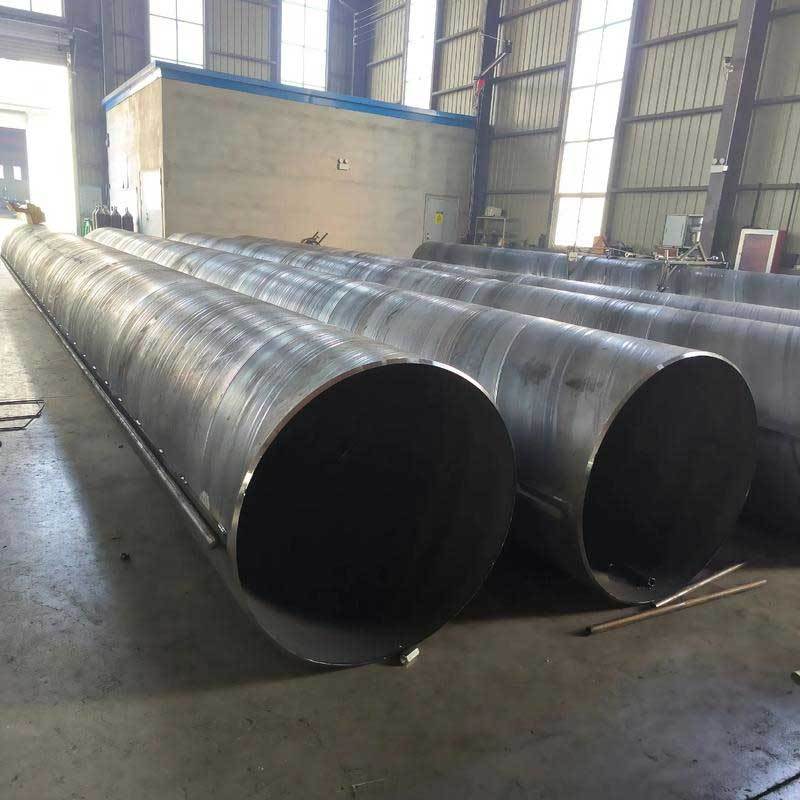
C9 Interlocking Pipe Pile
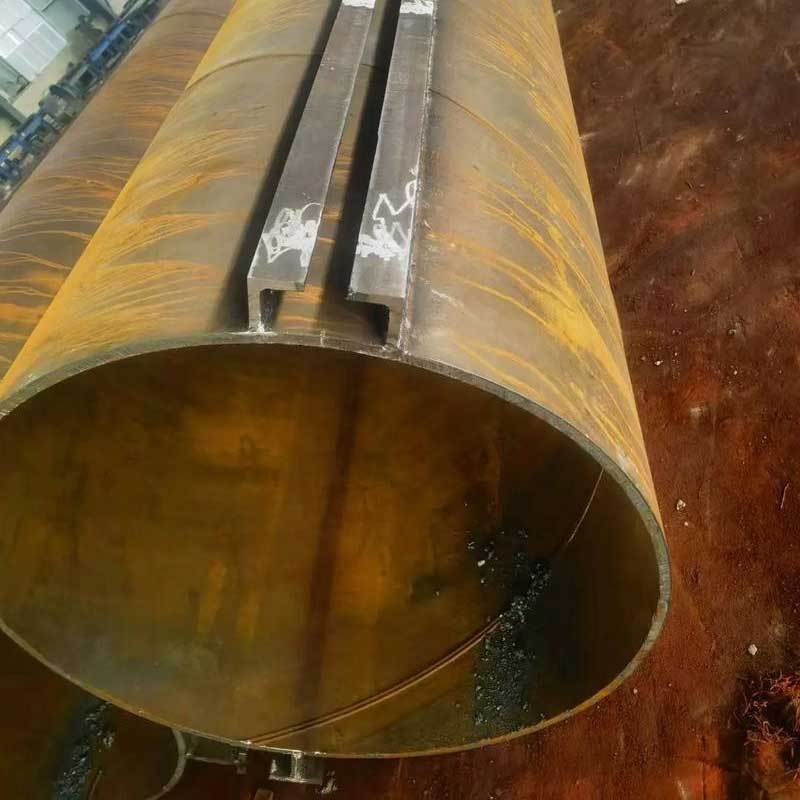
CT Interlocking Pipe Pile
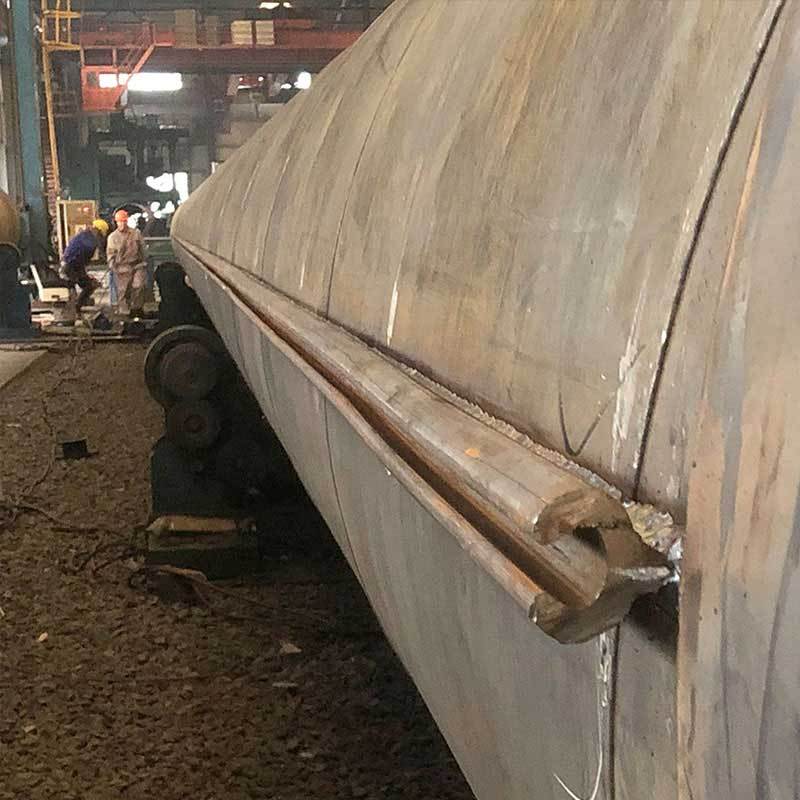
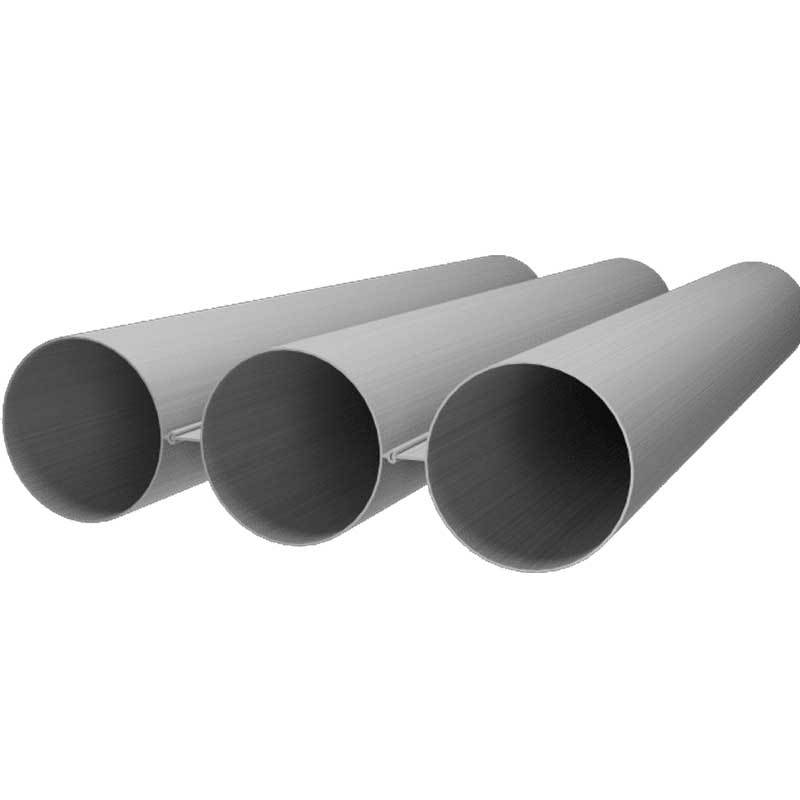
Socket-And-Ball Interlocking Pipe Piles
How It Works?
When carrying out pile driving construction on interlocking pipe piles, the first step is to connect the locking buckle, and then use equipment such as vibration hammers to gradually drive them underground. Sometimes, in order to increase lubrication, butter can be applied to the locking buckle to reduce resistance and greatly improve water tightness. This pile driving method has been used in Europe for 20 years, with the advantages of no welding required, single pass pile formation, reliable waterproofing, and fast construction. If there is a higher requirement for waterproofing, concrete or cement mortar can be filled inside the lock buckle for better waterproofing effect. If you need to know more construction details, please contact us immediately.
How Are Interlocking Pipe Piles Connected?
Interlock Type
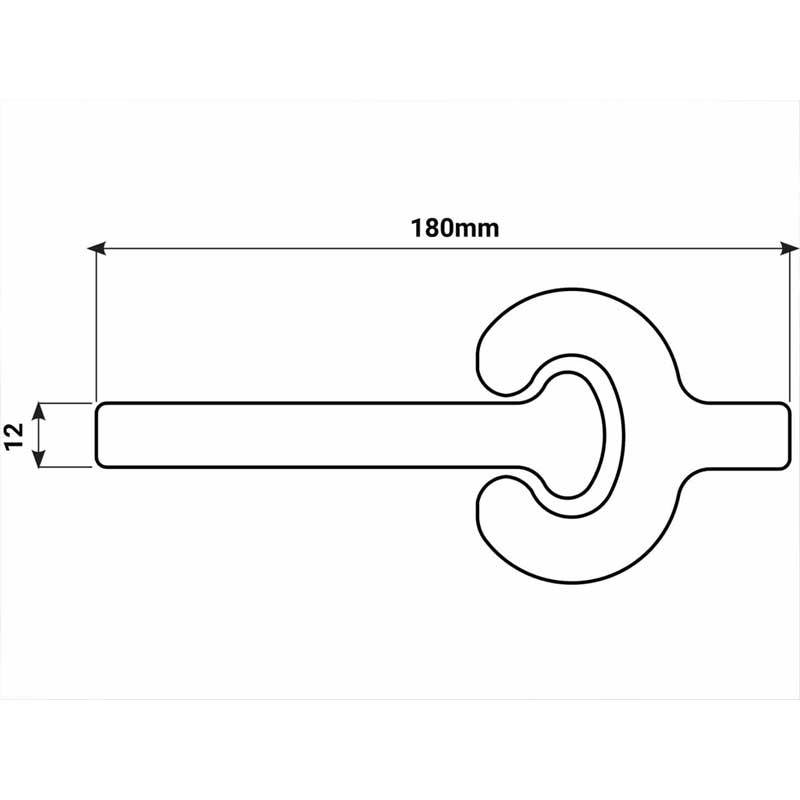
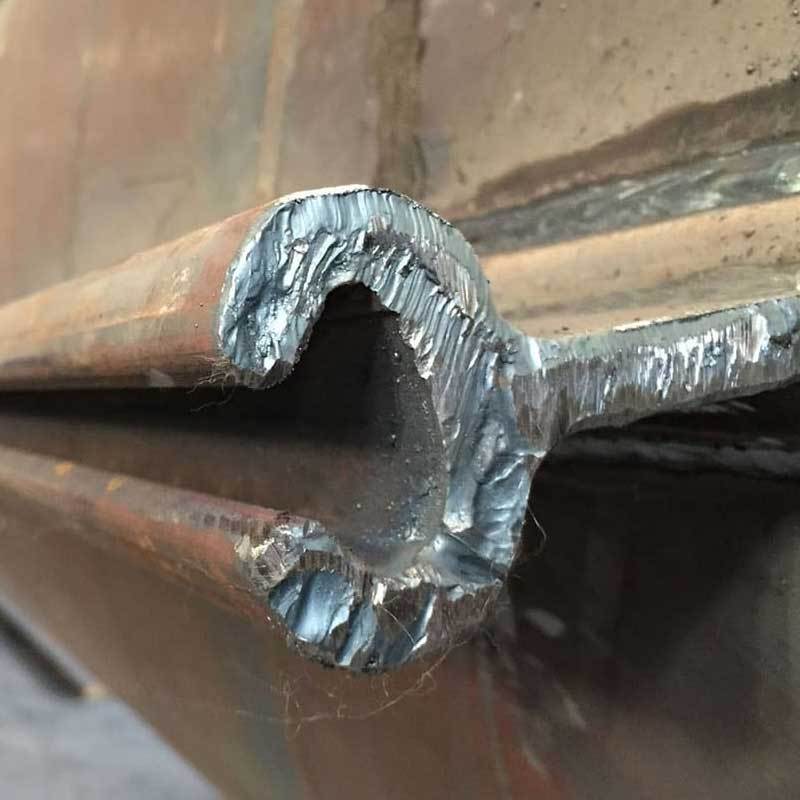
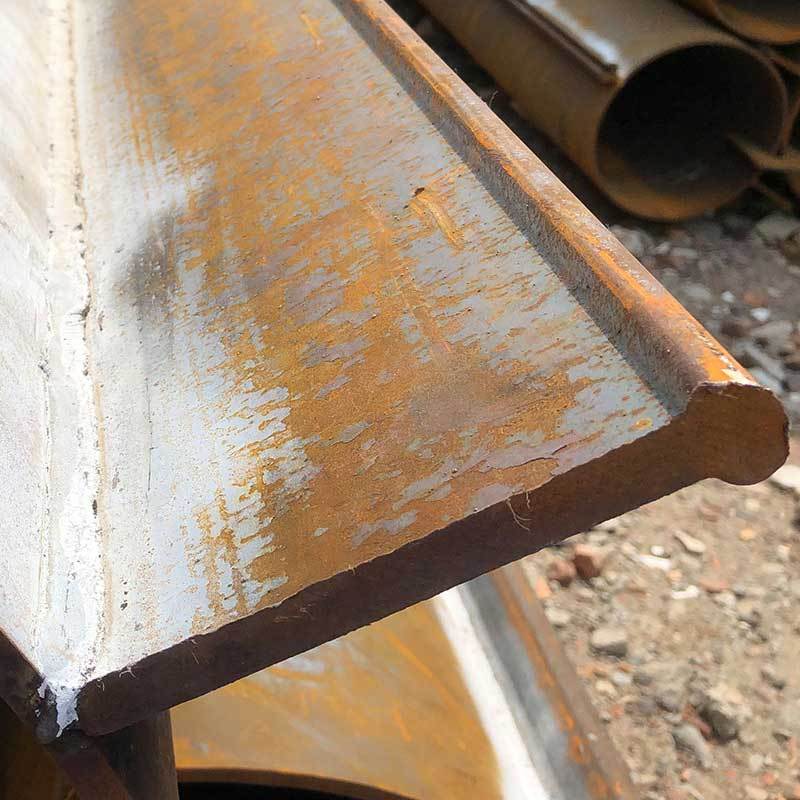
There are three main types of interlocking pipe piles: the C9 interlock, the CT interlock and the socket-and-ball interlock. The method of connecting steel pipe piles varies significantly depending on the type of interlock used. Please see the sample images of the various interlocks below.
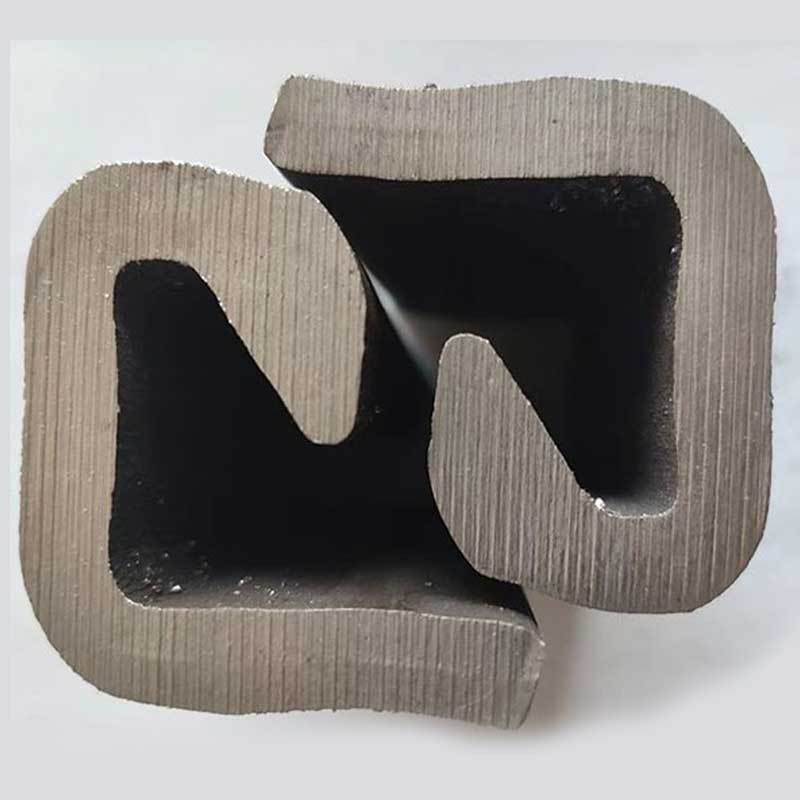
C9 Interlock
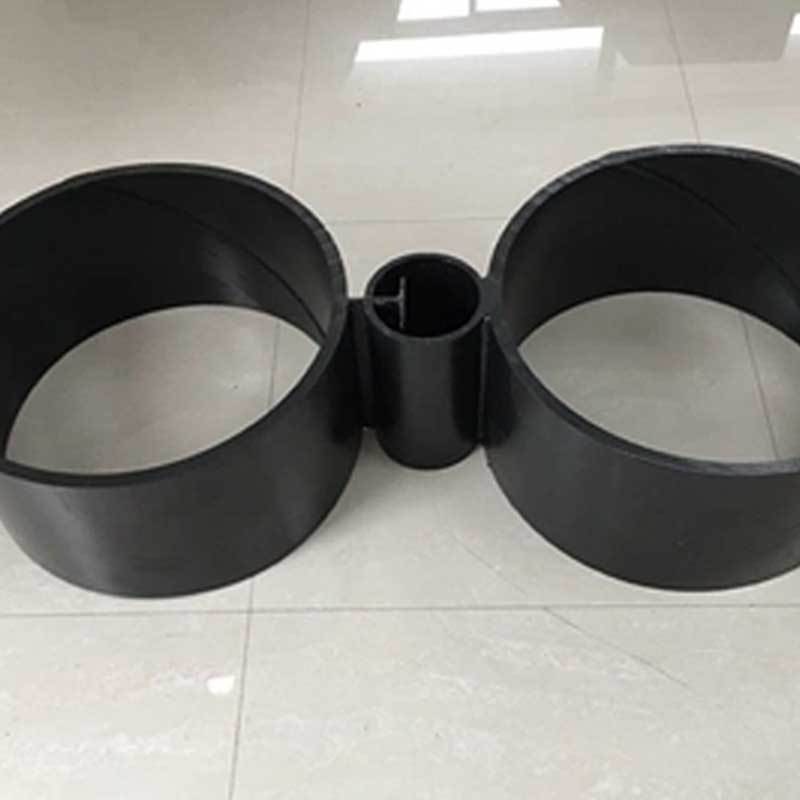
CT Interlock
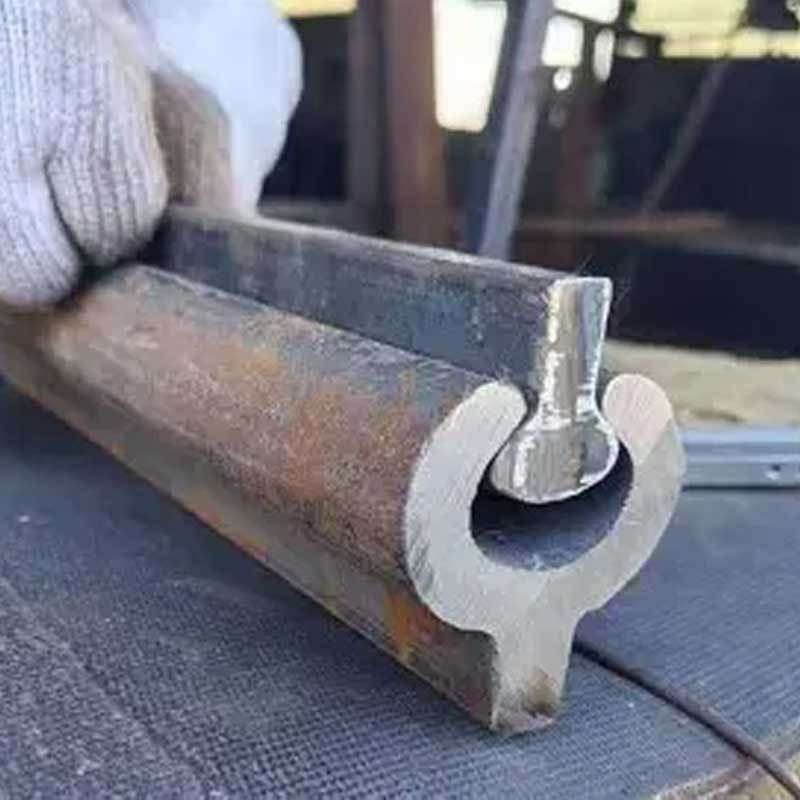
Socket and Ball Interlock
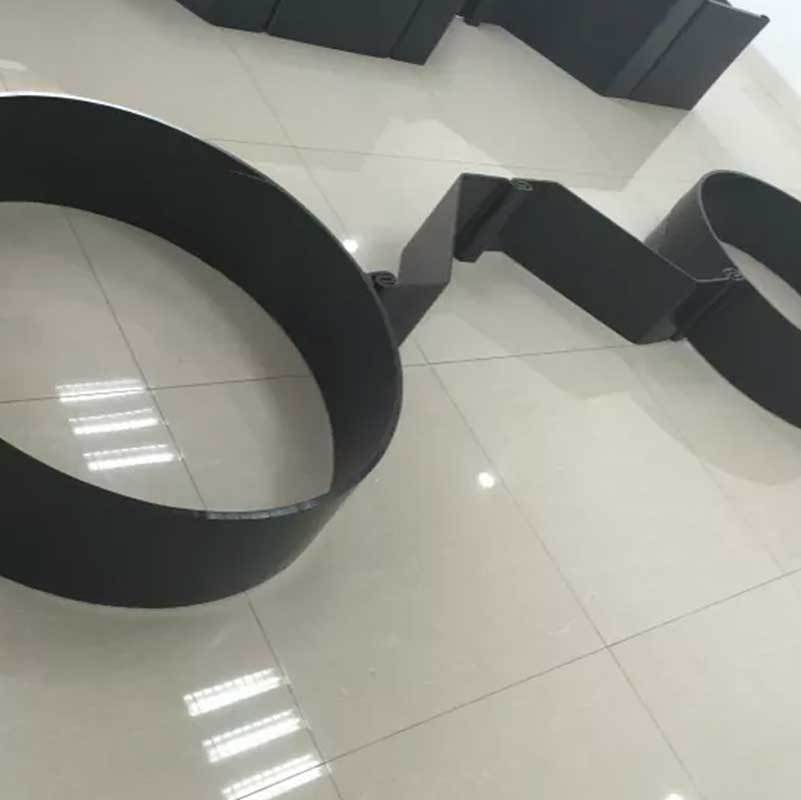
Main Connection Methods Of C9 Interlocking Pipe Pile
There are two main connection methods for C9 lnterlocking steel pipe piles: the U-shaped sheet pile connection method and the Z-shaped sheet pile connection method. As shown in the figure:


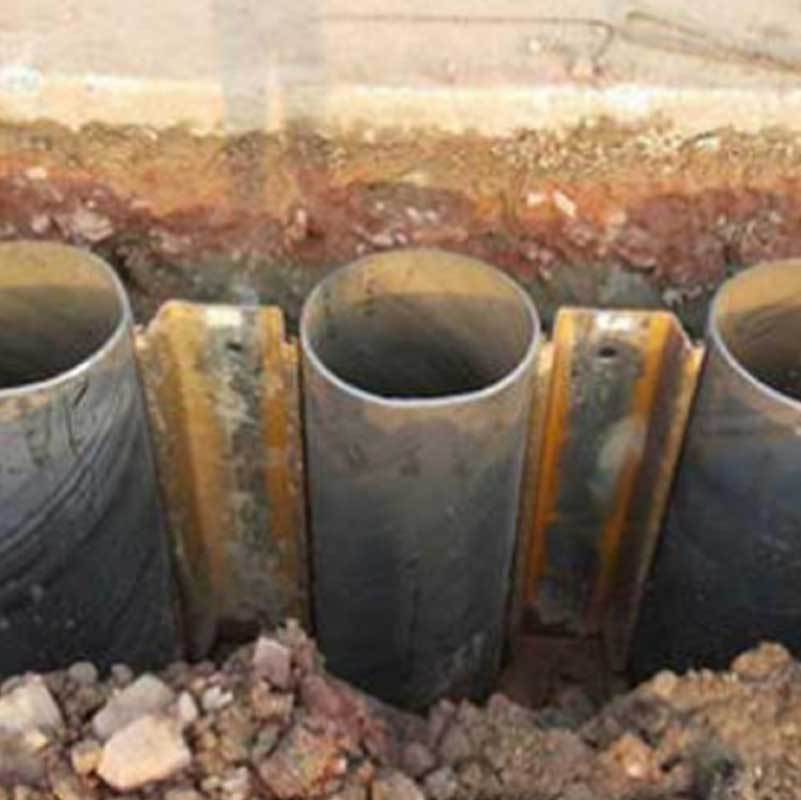
Connection Methods Of CT Interlocking Pipe Pile
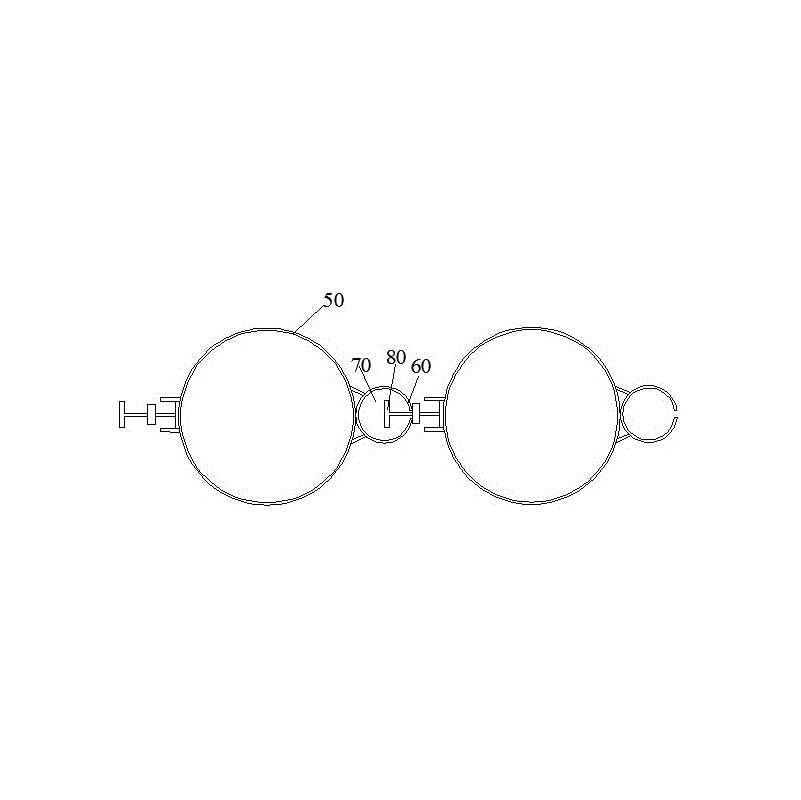
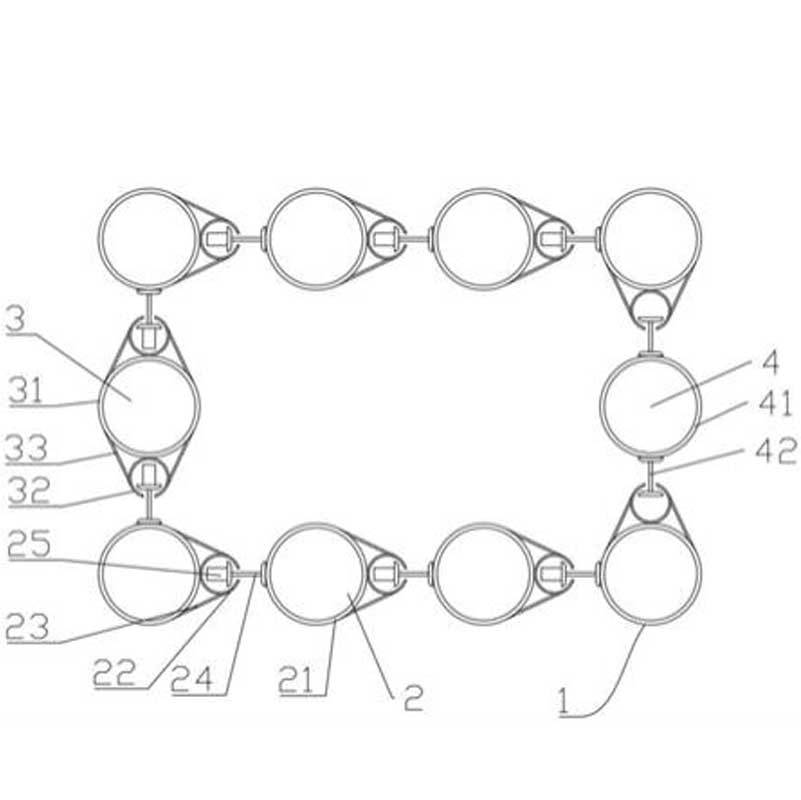
CT-type interlocking joints typically consist of C-shaped small steel tubes and T-shaped steel plates. The C-shaped small steel tubes are welded to the outer surface of the steel pipe piles, while the T-shaped steel plates are cut from I-beams and form a male-female interlocking structure with the C-shaped small steel tubes . The C-shaped component serves as the male joint, while the T-shaped component serves as the female joint; the two connect by interlocking during driving. Compared to traditional locking joints, the CT-type locking joint offers lower driving resistance, and the length of the T-shaped flange is adjustable, facilitating subsequent realignment.
Connection Methods Of Socket-And-Ball Interlocking Pipe Piles
Benefit
Compared with other concrete pipe piles or pipe piles made of other materials, spiral steel pipe piles have many advantages:
1. Good water tightness
The locking steel pipe pile is tightly connected with other Z-shaped steel sheet piles, which can effectively block water leakage and is particularly important in some dry pile foundation projects.
2. Fast construction
The construction of locking steel pipe piles is convenient and fast, and once started, it can be completed quickly.
3. Durable and sturdy
Compared to cement pipe piles, locking steel pipe piles are less prone to breakage and are more sturdy and durable.
4. Adapt to various soil types
Locking steel pipe piles can adapt to various types of soil and easily handle seabed silt and mixed soil.
Quality Control
Cangzhou Spiral Steel Pipe Manufacturing Group attaches great importance to the product quality of interlocking pipe piles. From the raw materials entering the factory to the forming of spiral steel pipes, from the preparation of the outer coating of pile pipes to the full welding of each lock buckle and steel pipe, almost every process has undergone strict testing, in order to ensure that your pile pipe quality meets 100% standards and guarantee the smooth implementation of your large-scale pile foundation project. >>Consult Now
The following are the common main interlocking pipe pile testing methods: manual ultrasonic non-destructive testing of the pile pipe body and manual magnetic particle inspection after locking buckle welding. Get A Free Quote
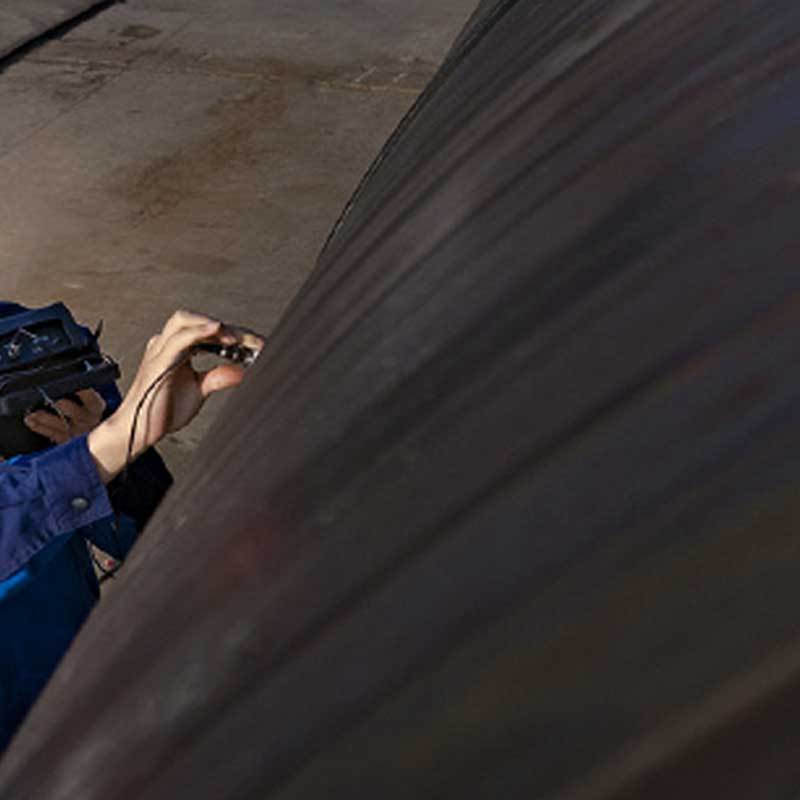
Spiral steel pipe artificial ultrasonic non-destructive testing
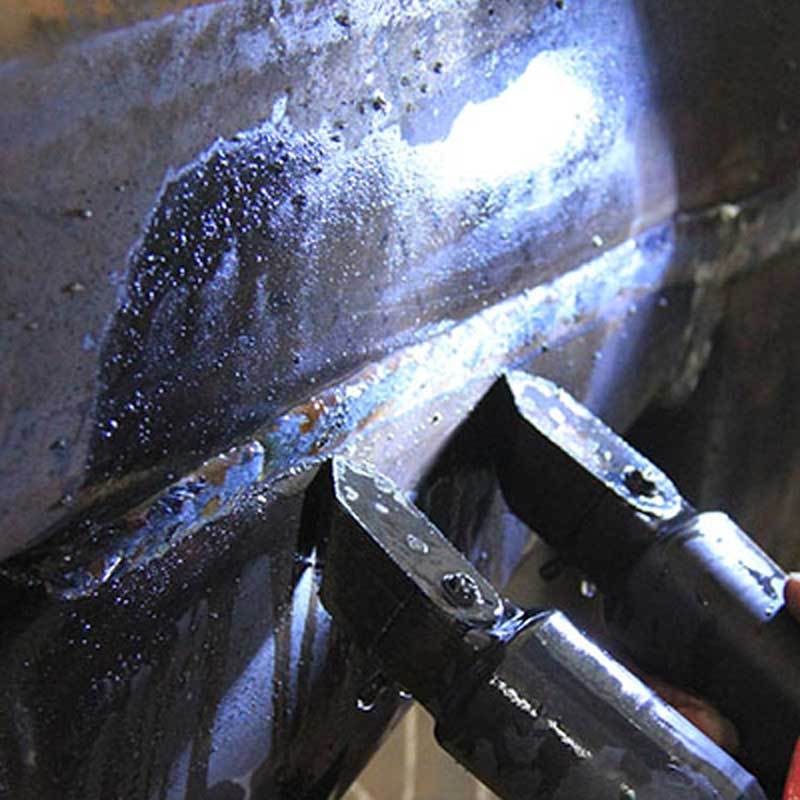
Manual magnetic particle inspection of lock buckle
Quick Reference Table for Common Interlocking Steel Pipe Pile Standards
In order to facilitate your quick selection, we have divided the mainstream standards into two categories: "preferred standards" (core recommendations) and "special operating conditions/alternative standards".
| Preferred recommendation criteria (applicable to 90% of foundation pits, cofferdams, and dock projects) | |||
| Standard | Common Grades | Best Application Scenario | Core Advantages (Selling Points) |
| ASTM A252 | Grade 1, 2, 3 | Building foundation, bridge pile foundation, port structure, waterproof cofferdam | The most universal in the industry, designed specifically for pile foundations, with good compatibility with locking buckles |
| EN 10210 (Hot Forming) | S235JRH, S275J0H, S355J2H | Building foundations, bridges, and high demand waterproofing walls | High strength and good reliability, more suitable for pile driving than cold-formed steel of the same grade |
GB/T 1591 (National Standard) | Q345, Q390, Q420 | Domestic foundation pit, cofferdam, and retaining wall engineering | Best value for money, sufficient domestic supply, short supply cycle |
| Special working conditions/alternative standards (for harsh environments such as high-intensity and offshore) | |||
| Standard | Common Grades | Typical Use | Selection Tips |
| API 5L / ISO 3183 | Gr.B, X42, X46, X52, X56, X60, X65 up to X70 and X80. | Offshore wind power single pile, deepwater dock, offshore platform | High performance is preferred, but the cost is relatively high, suitable for projects with strength requirements>400MPa |
| EN 10219 (Cold Forming) | S235JRH, S275JOH/J2H, S355JOH/JEH, S420MN, and S460MH. | General structural support, temporary works | The strength grade is similar to EN10210, but the reliability of the pile foundation is slightly lower than 10210 |
ASTM A500 / A53 | Grade B/C, Grade A/B | Lightweight enclosure, small temporary support | Non specialized pile foundation standards, limited to low bearing capacity and shallow depth working conditions only |
API 5CT | J55–P110 | Temporary offshore wind power piles and casing applications | Non standard pile material, belonging to the oil casing standard, used for special customization |
Quick Selection Guide: Strength Comparison&Customer Recommendations
The easiest question you can ask is: "Which standard should I choose for a material with a pressure of around 350MPa? ”
We have compiled a cross standard equivalent strength comparison table for you to solve the selection confusion:
| Cross Standard Equivalent Strength Comparison Table | ||||
| The Strength Level You Require | Recommended by ASTM | API/ISO Recommendations | Recommended European Standard EN | National standard GB recommendation (with the highest cost-effectiveness) |
| ~250 MPa (ordinary retaining) | A252 Gr.1 | — | S235 | Q235 |
| ~300 MPa (general foundation pit) | A252 Gr.2 | API X42 | S275 | Q275 |
~350 MPa (commonly used cofferdam) | — | API X52 / L360 | S355 | Q345 (most economical) |
~415 MPa (deep excavation/high water pressure) | — | API X60 / L415 | S420 | Q390–Q420 |
~450 MPa (heavy dock/offshore) | A252 Gr.3 | API X65 | S460 | Q460 |
One sentence selection suggestion:
Domestic conventional foundation pits/cofferdams: preferred GB/T 1591 Q345 → optimal cost, fast supply
Export or construction according to American standards: ASTM A252 Gr.2/Gr.3 is preferred → the most widely used globally
Offshore wind power/deepwater high-voltage operating conditions: consider API 5L X60 or above → large performance margin
European project/high standard waterproofing: Recommended EN 10210 S355J2H → hot forming, high reliability of pile driving if you have any question ,please contact us now.
Interlocking Pipe Piles Sizes According to Combi Wall Design
Interlocking Pipe Piles can be used in conjunction with different filling steel sheet piles to form a steel pipe pile composite wall, to meet your different engineering needs. The dimensions of these pile materials may vary, and the following are the size tables for the two most common combination wall schemes: connection with AZ series (Z-type) steel sheet piles, and connection with PU series (U-shaped) steel sheet piles.
If you are interested in purchasing lnterlocking steel pipe piles or steel sheet piles, Cangzhou Spiral Steel Pipe Group Co., Ltd. can also provide customized processing services based on your drawings.
Pipe Pile Size Chart of Combi-wall (AZ Serie / Z Type Sheet Pile)
| Pipe Pile OD(mm) | Pipe Pile Thickness(mm) | Infill Sheet Piles Double AZ18-700 Width(mm) | Weight(kg/m2) | I (cm4/m) | W(cm3/m) |
| 711 | 10 | 2171 | 150 | 86698 | 2439 |
| 711 | 12 | 2171 | 166 | 98531 | 2772 |
711 | 14 | 2171 | 181 | 110159 | 3099 |
813 | 10 | 2273 | 154 | 112751 | 2774 |
813 | 12 | 2273 | 172 | 129852 | 3194 |
813 | 14 | 2273 | 189 | 146695 | 3609 |
914 | 10 | 2374 | 158 | 144510 | 3162 |
914 | 12 | 2374 | 177 | 167991 | 3676 |
914 | 14 | 2374 | 195 | 191157 | 4183 |
| 1016 | 12 | 2476 | 182 | 214016 | 4213 |
1016 | 14 | 2476 | 202 | 244795 | 4819 |
1016 | 16 | 2476 | 221 | 275202 | 5417 |
1219 | 14 | 2679 | 212 | 378870 | 6216 |
1219 | 16 | 2679 | 234 | 428149 | 7025 |
1219 | 18 | 2679 | 256 | 476933 | 7825 |
1600 | 18 | 3060 | 279 | 932011 | 11650 |
1600 | 20 | 3060 | 305 | 1029827 | 12873 |
1600 | 22 | 3060 | 330 | 1126894 | 14086 |
1800 | 18 | 3260 | 290 | 1243339 | 13815 |
1800 | 20 | 3260 | 316 | 1375132 | 15279 |
1800 | 22 | 3260 | 343 | 1506029 | 16734 |
2000 | 20 | 3460 | 326 | 1777489 | 17775 |
2000 | 22 | 3460 | 354 | 1947882 | 19479 |
2000 | 24 | 3460 | 382 | 2117233 | 21172 |
2200 | 21 | 3660 | 350 | 2345823 | 21326 |
2200 | 23 | 3660 | 379 | 2560881 | 23281 |
2200 | 25 | 3660 | 408 | 2774744 | 25225 |
2500 | 21 | 3960 | 363 | 3186179 | 25489 |
2500 | 23 | 3960 | 393 | 3479998 | 27840 |
2500 | 25 | 3960 | 424 | 3772384 | 30179 |
Pipe Pile Size Chart of Combi-wall (PU Sheet Pile)
Pipe Pile OD(mm) | Pipe Pile THK(mm) | Infill Sheet Piles Triple PU18 Width(mm) | Weight(Kg/M2) | I(cm4/m) | W(cm3/m) |
711 | 10 | 2571 | 157 | 77612 | 2183 |
711 | 12 | 2571 | 170 | 87604 | 2464 |
711 | 14 | 2571 | 183 | 97423 | 2740 |
813 | 10 | 2673 | 160 | 100114 | 2463 |
813 | 12 | 2673 | 175 | 114656 | 2821 |
813 | 14 | 2673 | 190 | 128978 | 3173 |
914 | 10 | 2774 | 164 | 127753 | 2795 |
914 | 12 | 2774 | 176 | 134848 | 3235 |
914 | 14 | 2774 | 195 | 167673 | 3669 |
1016 | 12 | 2876 | 184 | 188187 | 3704 |
1016 | 14 | 2876 | 201 | 214684 | 4226 |
1016 | 16 | 2876 | 217 | 240862 | 4741 |
1219 | 14 | 3079 | 210 | 333326 | 5469 |
1219 | 16 | 3079 | 229 | 376204 | 6172 |
1219 | 18 | 3079 | 248 | 418650 | 6869 |
1600 | 18 | 3460 | 270 | 827536 | 10344 |
1600 | 20 | 3460 | 292 | 914044 | 11426 |
1600 | 22 | 3460 | 314 | 999889 | 12499 |
1800 | 18 | 3660 | 279 | 1110548 | 12339 |
1800 | 20 | 3660 | 303 | 1227937 | 13644 |
1800 | 22 | 3660 | 327 | 1344528 | 12499 |
| 2000 | 20 | 3860 | 313 | 1596226 | 15962 |
2000 | 22 | 3860 | 338 | 1748961 | 17490 |
2000 | 24 | 3860 | 363 | 1900763 | 19008 |
2200 | 21 | 4060 | 335 | 2117496 | 19250 |
2200 | 23 | 4060 | 361 | 2311366 | 21012 |
2200 | 25 | 4060 | 387 | 2504159 | 22765 |
2500 | 21 | 4360 | 347 | 2896465 | 23172 |
| 2500 | 23 | 4360 | 375 | 3163328 | 25307 |
| 2500 | 25 | 4360 | 403 | 3428890 | 27431 |
Competitive Advantages
1. Pile foundation steel pipes are available in diameters up to 3,620 mm
2. Steel grades and materials can be customized
3. Pile foundation steel pipes come with complete certification documentation
4. The factory offers one-stop procurement services
7. National CNAS-accredited laboratory ensures product quality and traceability
8. Extensive project experience
9. High production capacity and large inventory
if you have any question ,please contact us now.
Application
Interlocking pipe piles are widely used in pile foundation project scenarios such as dry docks, cofferdams, docks, flood control embankments, groundwater flow barriers, open cut supports, bridge piers, port and dock walls, bulkheads, deepwater berths, breakwaters, dock structures, container terminals, bridge foundation piles,spiral welded pipe piles for coastal structures, offshore wind turbine foundation piles, high bearing building foundation piles, mooring dolphin piles, etc. if you have any question ,please contact us now.
Project
1. Design and Construction of the Interlocking Steel Pipe Pile Cofferdam for the Main Pier of the Shuidu Second Bridge located in Danjiangkou City
2. 5700 Tons of Chinese Spiral Welded Pipes Set Sail To Support Infrastructure Development In Maputo, Mozambique
7 results
ViewShowcase
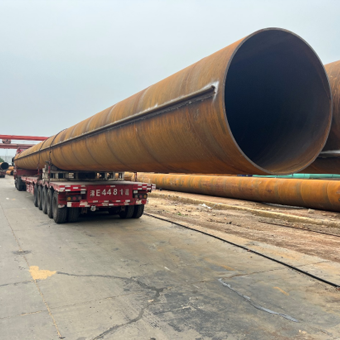
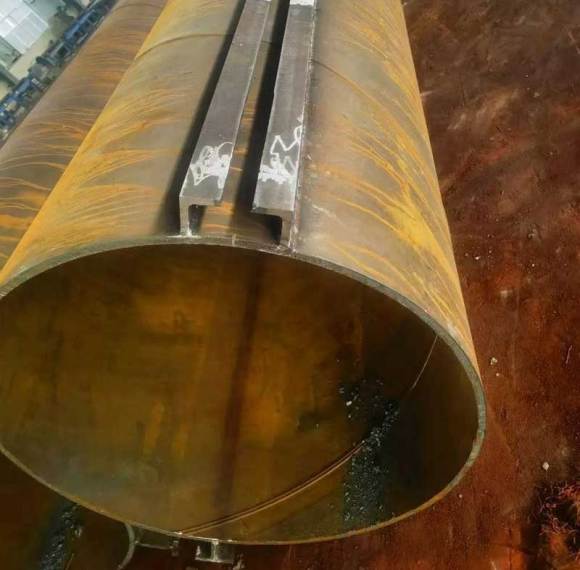
We offer high-quality CT interlocking pipe pile. Made with advanced processes, they boast high strength, corrosion resistance, and good welding. Ideal for construction foundation, bridges foundation, offshore foundation. Customized services available to meet industry demands.
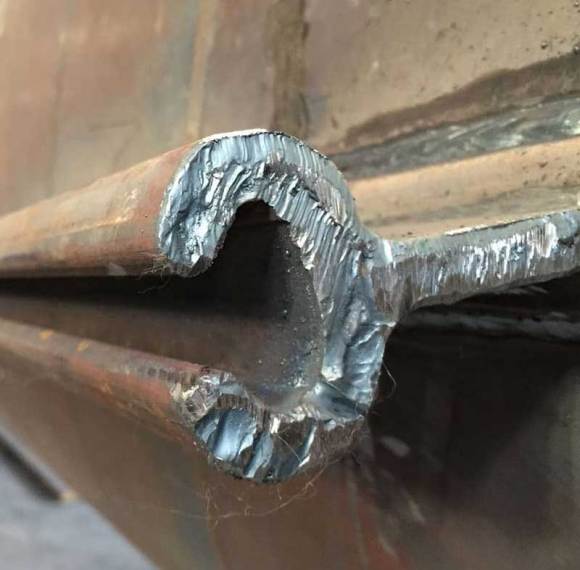
Cang Zhou Spiral Welded Steel Pipe Ground Can Produce All Kinds Of Socket And Ball Interlocking Pipe Piles, accept oem and odm.
ASTM A252 gr.1 gr.2 hollow pipe lSAW SSAW steel pipe large diameter oil and gas for sch 40 carbon steel spiral welded tube pipe
ASTM A252 Square Spiral Pipes Alloy Welded Carbon Steel Waterproof Pipe Prices Round Structure spiral steel pipe
astm a252 SSAW large diameter Oil Pipeline ERW round Hollow Section 40 api 5l 3lpp coated steel spiral welded pipe
China Factory spiral steel pipe pile large stock steel pipe cover pile sheet metal building materials